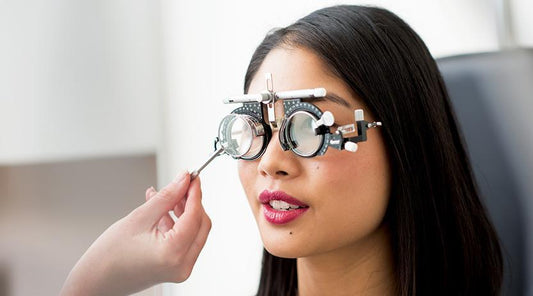
Your ultimate guide to choosing the right glasses

There’s more to choosing the right glasses than finding the right style. There are many other factors that can have a significant impact on your vision, comfort, confidence, and daily routine. With so many options for frames, lenses, coatings, and materials, choosing the right glasses can be overwhelming.

We’ve put together this handy guide to give you all the information you need, from understanding your prescription to finding frames that suit your lifestyle and routine. Whether you’re buying your first pair or looking to upgrade, this glasses guide is designed to help you make the best choice for you. This guide will also show you how to choose glasses that complement your face shape and style.

Ready to get started?

1. Understand your prescription 

 Before you choose new glasses, it’s important to understand what your prescription means. Common terms you might see include: 

  • SPH (Sphere): Indicates how strong your lens needs to be to correct near- or far-sightedness. 
  • CYL (Cylinder): Used to correct astigmatism. 
  • AXIS: Describes the orientation of the astigmatism correction. 
  • ADD: Shows the added magnifying power for reading or multifocal lenses. 
  • PD (Pupillary Distance): The distance between your pupils, which helps ensure your lenses are positioned correctly in the frames. 

 Your prescription is tailored for your eyes. If there are changes, even small, these can affect your vision and comfort. If you haven’t had an eye test in the last 12 months, we recommend booking one now.

2. Get the right fit  

Your glasses should fit well so that you barely notice them – this means physical comfort as well as providing vision improvement without discomfort.

Frame sizing includes three main measurements: 

  • Lens width: The horizontal width of each lens. 
  • Bridge width: The distance between the lenses over your nose. 
  • Temple length: The length of the arms that rest on your ears. 

Different face shapes and features will affect how frames sit. For example, people with wider faces may prefer larger frames, while those with low nose bridges may benefit from adjustable nose pads. Comfort should always be your top priority, especially if you wear your glasses all day.

3. Choose frame materials based on your lifestyle 

Frame materials affect more than just style. They influence comfort, durability, and weight. It’s important to factor in your lifestyle when choosing frames
especially if you’re an active person or you have a high-risk physical job.

  • Acetate: Strong and colourful, often used in fashion-forward frames and can be more eco-friendly than traditional plastics.
  • Metal: For a more minimalist look, metal frames are adjustable and lightweight. 
  • Titanium: Durable, corrosion-resistant, hypoallergenic, and lightweight. Titanium can be a good choice for people with sensitive skin or those who work in oxidising environments.
  • Flexible materials: Ideal for kids or people with active lifestyles, these frames are flexible and resistant to breakage. 

Take the time to think about how your glasses need to perform day-to-day. Whether you’re working at a desk, chasing toddlers, or playing sport, material choice is an important factor in the comfort and function of your glasses frames.

4.  Face shape isn’t everything but it’s a good starting point 

 Your face shape can guide you toward frames that balance your features.

Some common face shapes include: 

Of course, there’s no reason to let traditional face shape rules restrict you, it’s simply a way to start exploring. Style, personality, and comfort are also important elements in choosing the right glasses.

5. Know your lens options 

Choosing the right lenses for your frames can have significant impact on your comfort and vision.

Common types of lenses include: 

  • Single vision lenses: For either distance or reading or both. 
  • Bifocal lenses: Contain two prescriptions, with a visible line. 
  • Progressive lenses: Offer multiple powers in one lens, without lines. 
  • Vocational or occupational lenses are designed for the dual purpose of screen use and reading. The top section of the vocational lens is for computer distance and the bottom section is for reading.
  • Occupational or task-specific lenses: Designed for digital work, driving or other specific activities. 
  • Bifocal lenses: Contain two powers, with a visible line and are usually used for distance and reading. 


The best lenses for your glasses will depend on your age, prescription, and lifestyle.

6. Add optional lens coatings and enhancements 

Lens coatings can enhance both comfort and performance of your glasses.

Here are some lens coating and enhancement options: 

  • Anti-reflection coating: Reduces glare, especially useful for screens and night driving. 
  • Scratch-resistant coating: Helps your lenses last longer. 
  • UV protection: Protects your eyes from harmful sun exposure. 
  • Blue light filter: may help reduce eye strain by limiting exposure to blue light.
  • Photochromic lenses: Adapt to changing light conditions, going dark outdoors and clear indoors. 


Think about which coatings and enhancements make sense for your lifestyle. Combining the right lens enhancements can significantly improve your visual experience. 

7. Match glasses to your lifestyle 

Your daily routine can influence which features you need in your glasses. 

  • For work or screen use: Look for lightweight frames and anti-reflection coatings. 
  • For driving: Polarised sunglasses for daytime or lenses with an anti-reflection coating to help reduce glare from lights at night. 
  • For active kids: Flexible frames and
    impact-resistant lenses with durable coatings are essential. 
  • For style-focused wearers: Bold colours, geometric shapes, and modern materials. 

 There’s no one-size-fits-all solution, the best glasses are the ones that fit your life, style and vision needs so take the time to decide what’s most important for you.

8. Add a second pair (or two)  

Having more than one pair of glasses isn’t just convenient, it’s also practical.

  • A backup pair is helpful in case of loss or damage. 
  • Prescription sunglasses provide clear vision and sun protection outdoors. 
  • A work-specific pair to provide the most comfortable vision while using screens. 

9. Caring for your glasses  

Here are a few tips to help keep glasses in good condition.

Do: 

  • Use a lens cleaning spray  
  • Gently wipe the lenses with a soft tissue to remove grease and grime from the lens surfaces 
  • Use a lens microfibre cloth to polish the lenses 

Don’t: 

  • Use hot water, paper towels or your clothes (they can damage the lens surface or coatings) 

If your glasses feel loose or uncomfortable, bring them in for a free adjustment. We’re always happy to help. 

Frequently asked questions

How do I choose the right glasses for me? 

Consider your prescription, face shape, lifestyle, and comfort. One of our friendly team members can help you narrow down your options.

Should I choose metal or plastic frames? 

Metal frames are lightweight and adjustable. Plastic (acetate) frames offer bolder styles and colours. The best choice depends on your style and needs.

What lenses are best for reading? 

Single vision reading lenses are ideal if you only need vision help up close. Progressive lenses work well if you also need help with other distances.

What’s the difference between bifocals and progressives? 

Bifocals have a visible line and correct vision for two focal lengths. Progressives have a seamless transition of vision across multiple distances.

Your eyes deserve the right choice

Choosing the right glasses is about more than just how they look, it’s about finding something that supports your vision, your comfort, and your confidence every day. 

Need help making a choice? Book an eye test and one of our optometrists or optical dispensers can help you understand how to choose glasses that match your vision needs and budget. You can explore our full range of glasses online today.